M is for Measurable
You've made your goal specific. Now how do you know you're actually getting there? The answer is in the M.
"The more you can define your goals, the more likely you are to achieve them."
Last time we looked at S for Specific — turning vague wishes like "I want to get fit" into something concrete and actionable. If you missed it, go back and start there, because everything builds on that foundation.
Now we move to M for Measurable. And this one is just as important, because a goal without a measure is still just a wish.
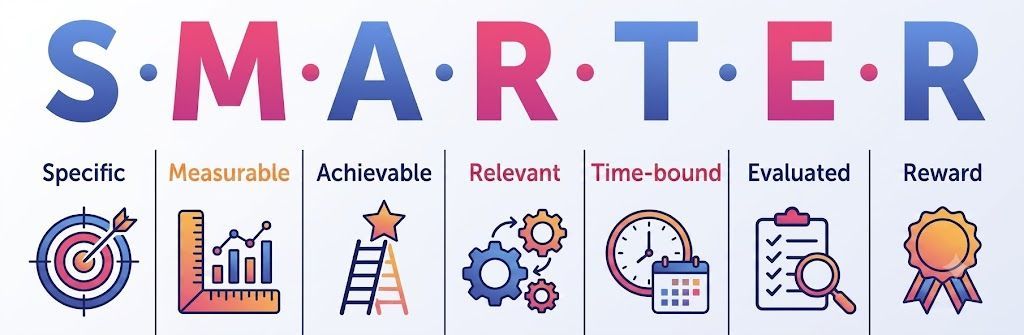
Why Measurement Matters
I'm training for a triathlon in July. Last week I was on the bike, this week I've just finished a 5K run — actually one of my best in a long time. And that's the point. I know it was one of my best because I'm measuring. Without that, it's just a run. With it, it's progress.
A goal of "I want to get fit and run a 5K" gives you two things: the goal itself and something to measure. That combination is powerful. It doesn't just tell you where you're going — it shows you how you're getting on along the way.
The Problem With Unmeasured Goals
If your goal is "I want to get fit," how do you know when you've achieved it? You don't. There's no moment where you can say "yes, I did it." Without measurement, goals fade — not because you gave up, but because there was nothing to track, nothing to celebrate, nothing to course-correct against.
Measurement keeps your goal alive.
Measurement in Action
Take a business example. Say your goal is to engage 10 new clients in six months. Straightforward, specific — and now you can measure it.
Break it down and suddenly you know you need roughly one new client per month. Now ask yourself: what happens if you get to month three and you haven't landed a single one?
That measurement gives you two choices:
- Review the target. Was six months realistic? It's easy — especially for the ambitious among us — to set targets that stretch a little too far. Measurement tells you that early enough to adjust.
- Review the strategy. Are you actually reaching the places where your potential clients will find you? Are you doing the right things, or just the familiar ones? Without measurement, you'd never know there was a problem until it was too late.
Milestones: Targets Along the Way
One of the most powerful things measurement does is allow you to set milestones — smaller targets on the road to the big one.
In training, I'm not just thinking about the triathlon finish line. I'm thinking about where I need to be in four weeks, in eight weeks, in twelve. Each milestone is a check-in, a chance to see if the plan is working and adjust if it isn't.
The same applies to any goal. Whether it's weight loss, business growth, or a personal challenge — build in moments to measure, review, and recalibrate. Your goal stays alive, stays relevant, and you stay motivated.
Your Turn
Take the specific goal you wrote after reading part one. Now ask:
- How will I know when I've achieved it? Define what success actually looks like in numbers, dates, or clear outcomes.
- What does progress look like along the way? Set at least two or three milestones between now and the finish line.
- When will I check in? Put a review date in your diary right now. Measurement only works if you actually look at the numbers.
The Takeaway
Specific tells you where you're going. Measurable tells you how you're getting there. Together, they turn a goal from something you hope might happen into something you can actively work towards, track, and achieve.
Keep measuring. Keep adjusting. Keep going.
Next in the series: We look at A — Achievable. Ambition is good. But there's a fine line between a stretch goal and one that sets you up to fail. We'll show you how to find it.